What is a Cast Net?
Understanding Cast Nets
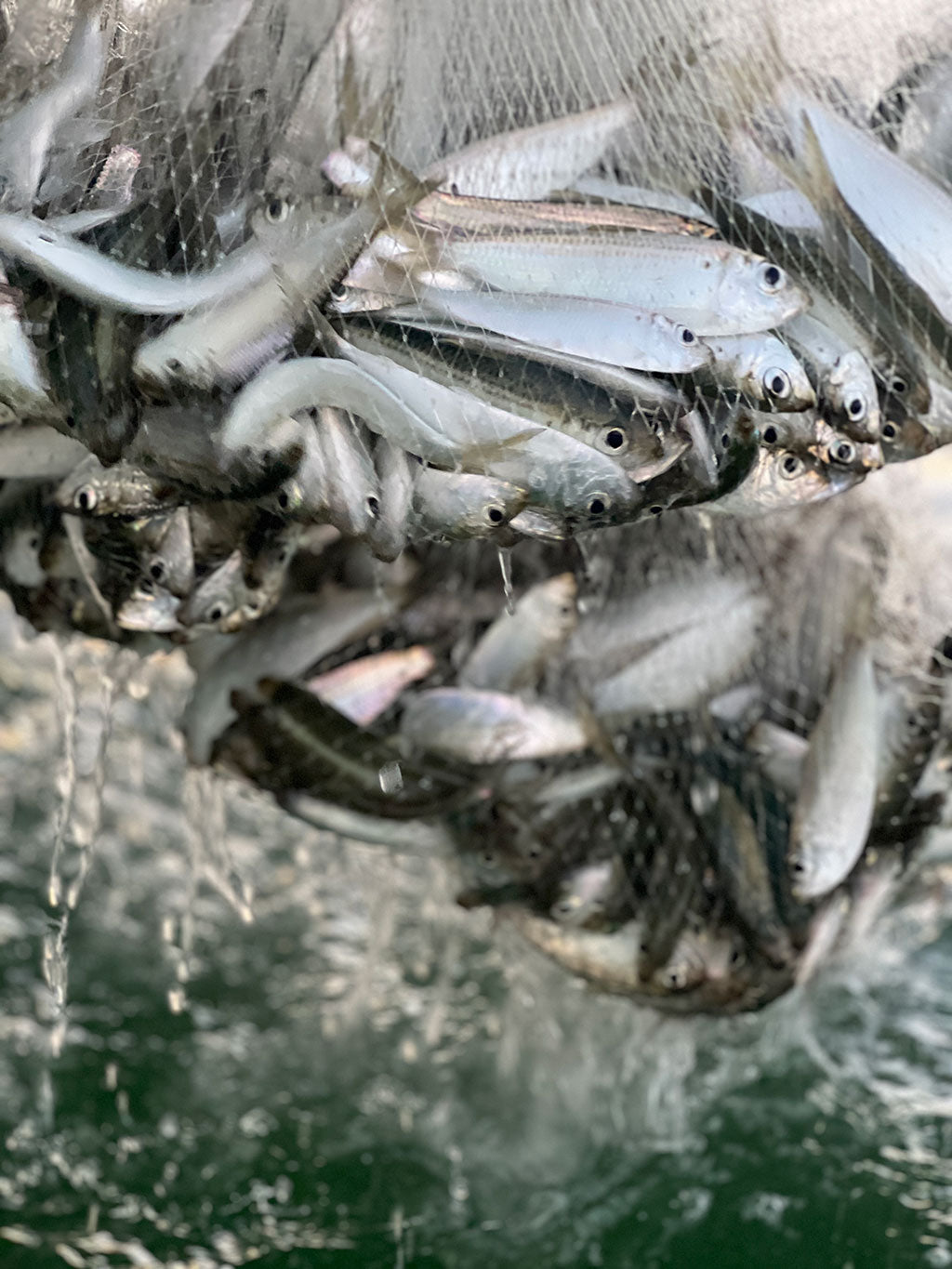
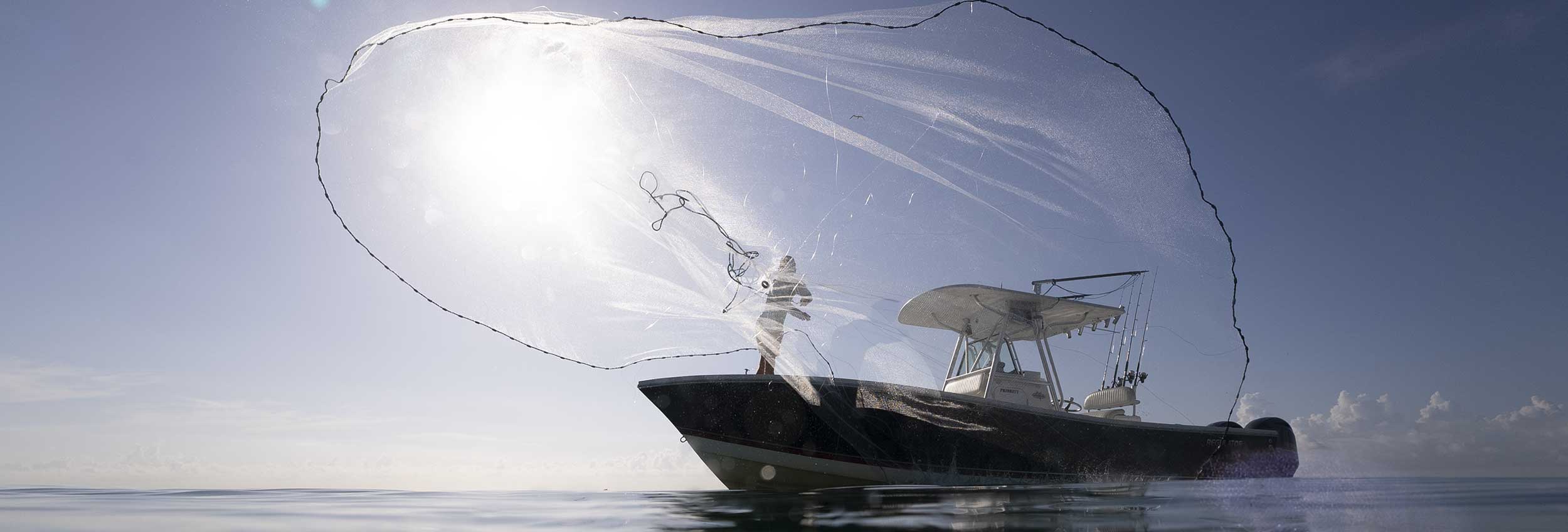
A cast net is a circular net, usually made from monofilament mesh, designed for single-person operation. It is thrown into the air, spreads out, and then lands on the water to cover a targeted group of baitfish.

As the net sinks, the fisherman pulls a handline, which tightens drawstrings connected to a weighted lead line. This action closes the net at the bottom, trapping the fish inside by forming a secure bag, thereby preventing their escape.

Cast nets are highly regarded by recreational anglers for their minimal impact on fisheries. They are compact enough for one person to manage yet large enough to effectively capture non-game fish for bait. Unlike larger commercial nets, cast nets reduce the risk of harming non-target species like turtles. Any unintended catch, or by-catch, can be easily released unharmed by simply reopening the net.

Anglers typically use cast nets to capture a variety of bait, including mullet, bunker, shrimp, pilchards, shad, sardines, ballyhoo, croakers, and shiners, among others. These nets are versatile, effective in different environments such as saltwater, freshwater, rivers, bays, lakes, and oceans. Investing in a cast net is considered one of the best decisions for enhancing fishing tackle.

Anatomy of a Cast Net
Most cast nets share common design elements, yet the quality of these components can vary significantly. Essential parts of a cast net include a handline, horn, braille lines, and lead line.
A premium, high-performance cast net, such as those made by JuJu, incorporates techniques unique to hand-made construction. These premium nets often feature a hand-tied, six-panel design that enables them to open fully and flatly, forming a perfect circle with each throw. This design consists of six pie-shaped sections meticulously tied together, enhancing the net's functionality and effectiveness.
Investing in a premium cast net is highly advisable for serious anglers. Not only do these nets provide more satisfying results, but they also tend to last longer, making them a wise investment. Taking the capture of live bait seriously is a critical step towards joining the elite group known as the ten percenters, who understand the value of using well-constructed equipment to maximize their catch. Members of this exclusive club would never settle for a poorly made net, recognizing that a well-made cast net is essential for successful fishing.
Materials Used in Cast Nets
Cast nets are primarily made from monofilament line, with the thickness of this line varying according to the mesh size of the net. High-quality nets typically feature soft mesh and heavy-duty braille lines, which contribute to their effectiveness and durability.
Historically, cast nets were often constructed from nylon, a material developed in the mid-nineteenth century that was initially popular in net making. However, nylon nets have fallen out of favor in modern times due to some significant drawbacks. Nylon does not sink as quickly as monofilament and is more visible to baitfish, which can decrease its effectiveness in stealthy fishing—a crucial aspect in both cast net fishing and rod and reel fishing.
Today, while nylon nets are still available, they are considered somewhat outdated or "old school." This is partly because monofilament manufacturing techniques were not as advanced over 40 years ago as they are now. The evolution of these techniques has made monofilament the preferred material in contemporary cast net construction due to its superior properties in water.

Written by Michael Grimm