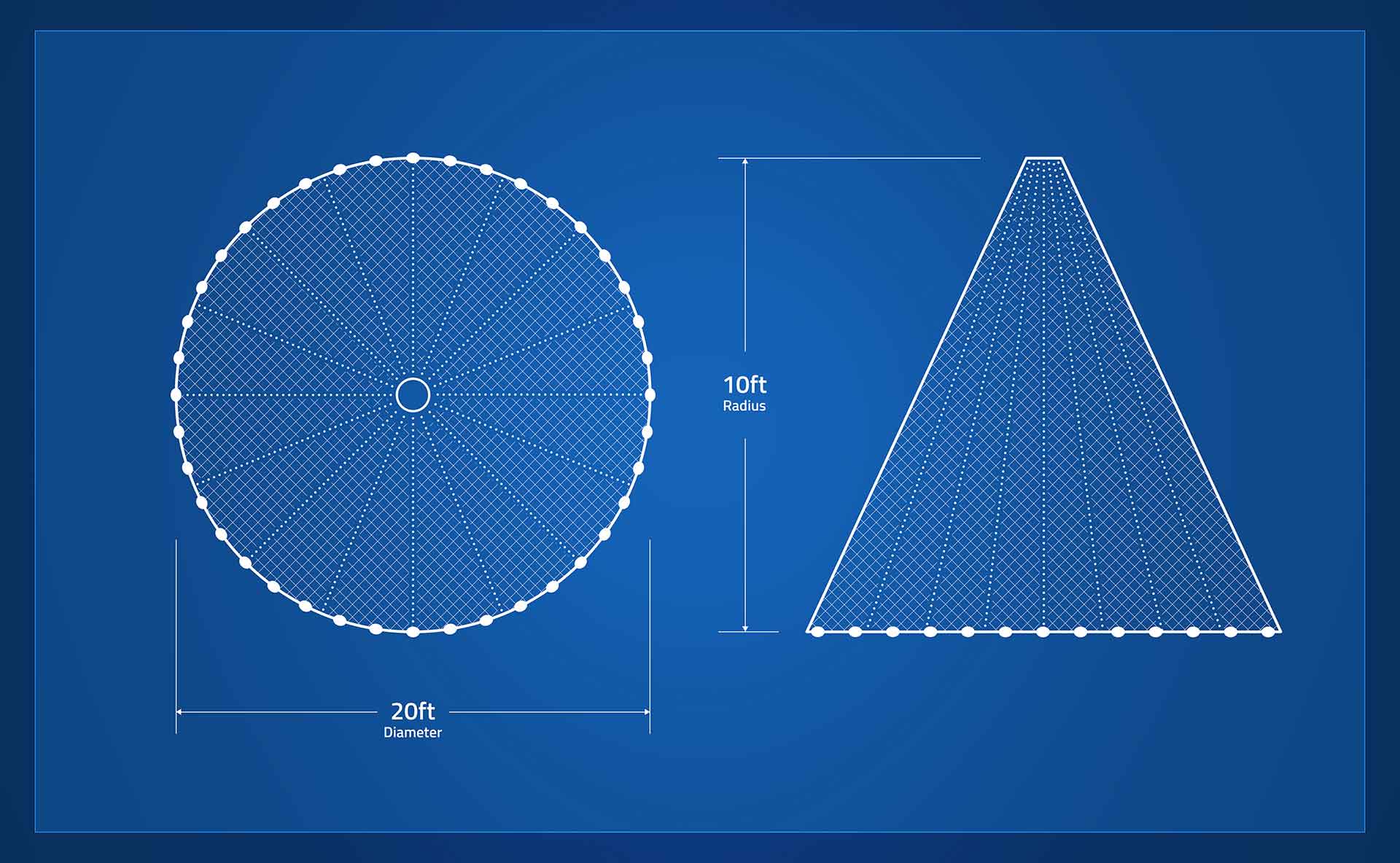
Components of a Cast Net
Handline: Each cast net comes with a handline that is typically worn around the wrist to retrieve and close the net, securing the catch. High-quality cast nets may include up to 30 feet of heavy-duty poly-braided floating or nylon line, allowing for deeper and broader throws such as from bridges and piers.

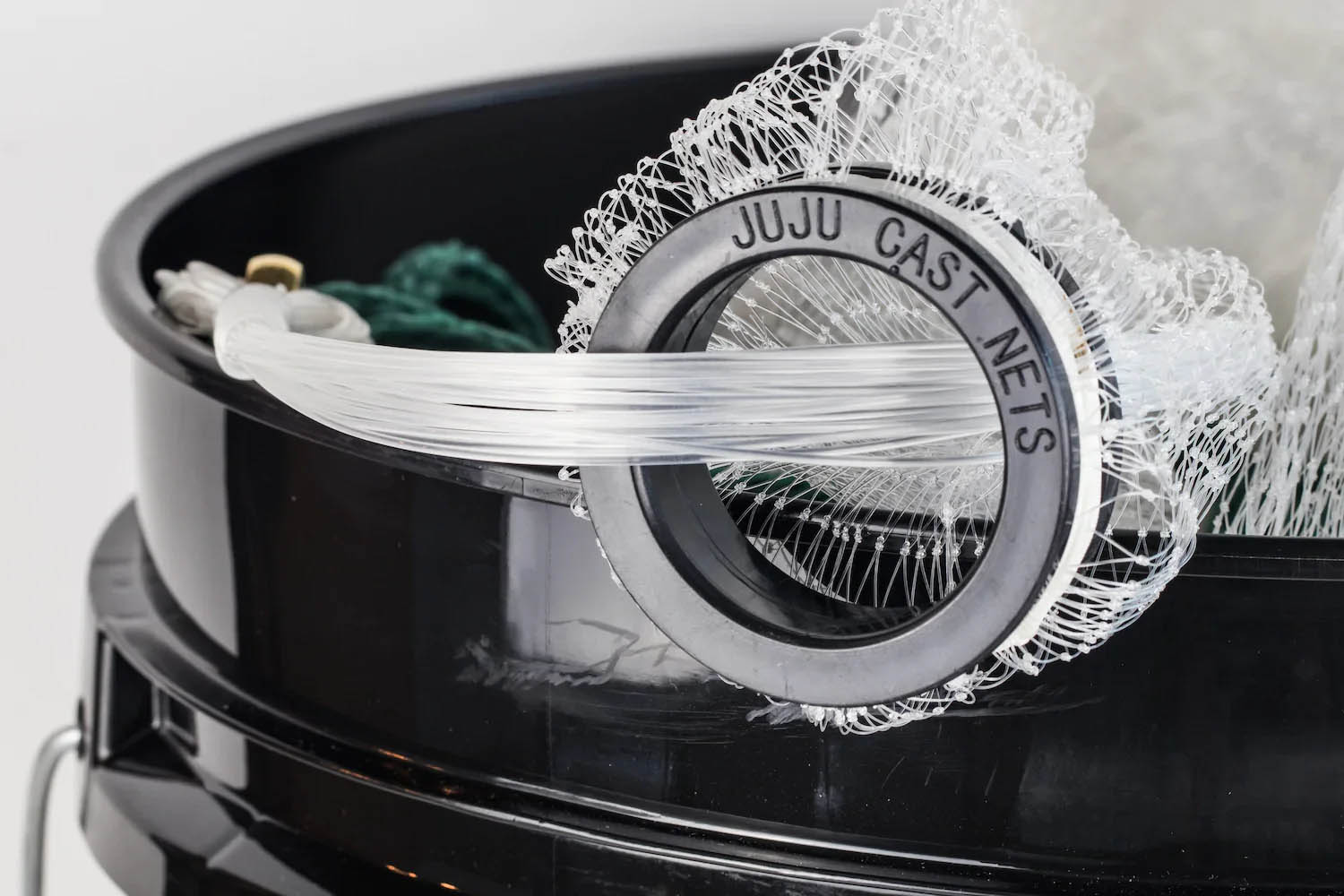
Horn: Located at the top of the net and connected to the selvage, the horn is used to open the cast net to release the catch. Historically made from steer horn, modern horns are crafted from heavy-duty plastic and come in various sizes. A large, open horn without cross-sections is preferable for easy clearance of braille lines or tangles.

Mesh: Mesh size, the measurement of squares in the net's webbing from knot to knot, is a crucial consideration when purchasing a cast net. Common sizes range from 3/16” to 1”. The choice of mesh size should match the size of the targeted baitfish to prevent them from gilling themselves or escaping. A 3/8” mesh is versatile, suitable for catching a variety of baits from pilchards to ballyhoo.

Braille Lines: These monofilament lines run from the horn through a swivel to the lead line, closing the net by forming a bag when pulled. Quality nets feature multiple braille lines for faster closing and better containment of bait.
Swivel: The swivel connects the handline to the braille lines and is critical for preventing twists and ensuring the net opens fully. High-quality nets, like those from JuJu, use a robust commercial-grade inline swivel, which is stronger and more durable than typical swivels.

Selvage: This is where the net connects to the horn and lead line, a high-stress area on any cast net. Premium nets often feature meticulous selvage connections, and double selvage is preferred for heavy-duty use, such as in rocky areas where larger bait like mullet might cause tears.
Lead Line: The lead line is weighted and encircles the bottom of the net, ensuring it sinks quickly to trap bait. High-performance cast nets use spherical, marble-sized leads spaced closely together, which helps reduce tangles and escape of bait, while also sinking efficiently.

When selecting a cast net, focus on nets that are designed to catch fish effectively, rather than those that merely look appealing to fishermen.

Written by Michael Grimm